 Shopping Cart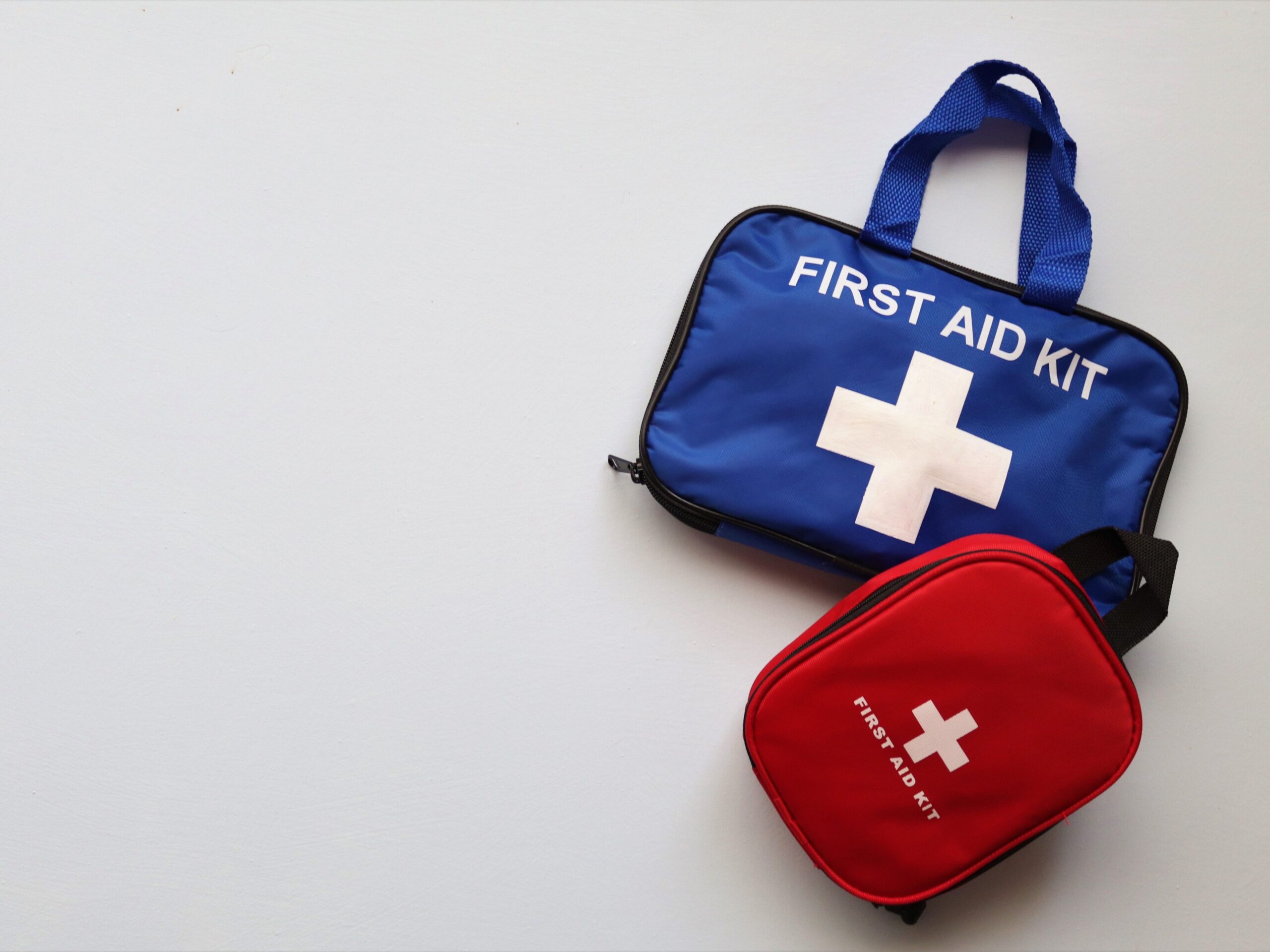
Let’s be honest – most safety programs start strong and quietly fall apart by February.
The hard hat gets left in a truck. The first aid kit runs out of bandages and nobody reorders them. The wet floor sign is in a closet somewhere. It’s not that anyone stopped caring. It’s that safety supplies are easy to deprioritize when everyone is busy.
As we observe National Safety Month in June, it’s a good time to look around and ask: If something went wrong today, would we be ready?
We will walk through the areas we see businesses most commonly overlook – and what you can do about each one.
Start with your people, not your paperwork
When safety managers talk about where to begin, the answer is almost always personal protective equipment. Not because it’s the most exciting category, but because it’s the most immediate line of defense between your employees and a bad day.

Think about who on your team is actually exposed to risk. The person doing heavy lifting every morning probably needs a back support – the Ergodyne ProFlex Economy Elastic Back Support is a simple, low-cost way to reduce strain before it becomes an injury. Workers in loud environments need reliable hearing protection, and the E-A-R TaperFit or E-A-R Classic Earplugs are easy to keep stocked in quantity. Anyone around flying debris or chemicals needs eye protection that actually fits and gets worn – the 3M SecureFit 400-Series or Ergodyne AEGIR Safety Glasses are comfortable enough that people won’t “forget” them.
For outdoor crews this time of year, heat illness is a real threat that’s easy to underestimate. Something as simple as the Ergodyne Evaporative Cooling Towel or Cooling Bandana can make a meaningful difference on a hot job site. Sunscreen dispensers near the door don’t hurt either.
The goal isn’t to hand everyone a box of gear and check a box. It’s to make the right protection easy to reach and easy to use.
Your first aid kit probably isn’t ready
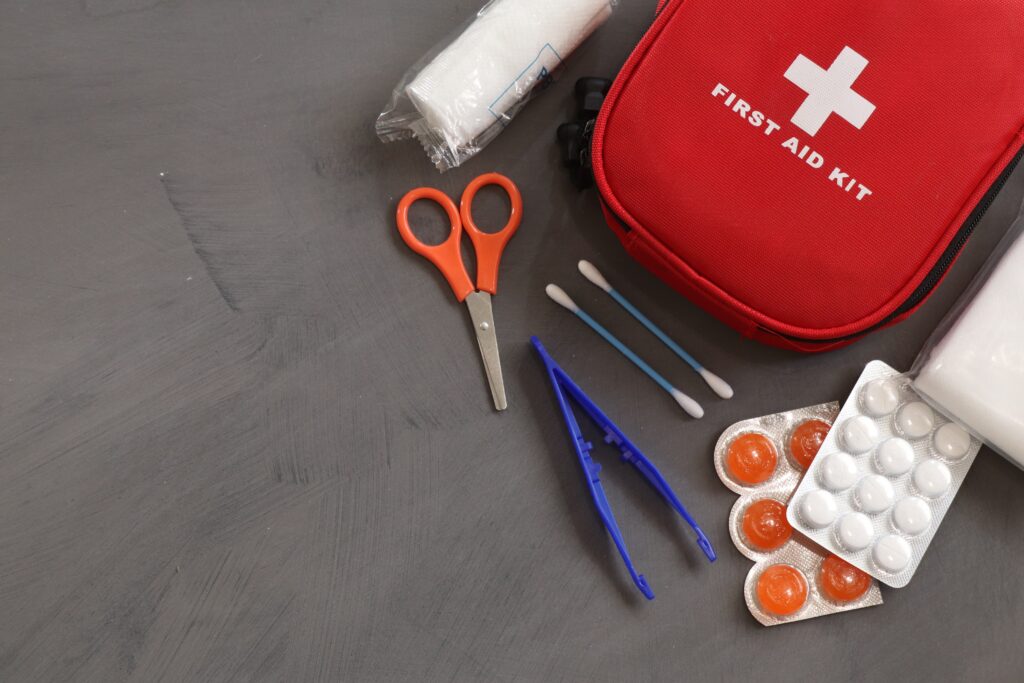
This one stings a little, but it’s worth saying: most workplace first aid kits are either expired, half-empty, or both. If you can’t remember the last time you checked yours, that’s your answer.
A proper setup starts with a dedicated space – a First Aid Cabinet gives you a wall-mounted, organized home for everything. From there, the First Aid Only 131-Piece Essentials Kit covers the basics, and keeping Curad Sterile Alcohol Swabs, exam gloves, and a digital thermometer on hand means you’re ready for the small stuff without scrambling.
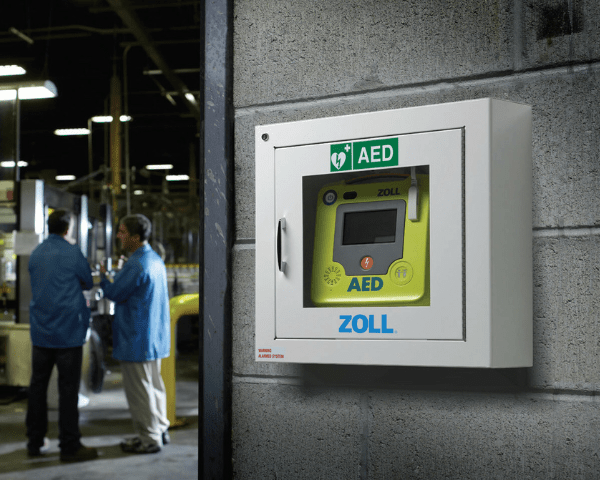
For bigger emergencies, the conversation has to include an AED. Cardiac events happen in offices, warehouses, and schools – not just hospitals. The ZOLL AED 3 is designed to guide even untrained bystanders through the process, and the wall cabinet keeps it protected, visible, and accessible. It’s one of those purchases you hope you never need, but will never regret having.
Clean and safe are the same thing
There’s a reason “a clean workplace is a safe workplace” became a cliché – it’s true. Slippery floors, contaminated surfaces, and poor hand hygiene create real risk, and they’re entirely preventable.
The basics here aren’t complicated. Keep touchless soap dispensers filled and stocked with something that actually works – PURELL ES10 and Dial Gold Antibacterial are both solid choices. Pair them with a touchless paper towel dispenser so the hygiene loop is complete. For surface disinfection, Fantastik Multisurface Disinfectant Degreaser handles most situations, and Simple Green Industrial Cleaner is your go-to for heavier grease and grime.
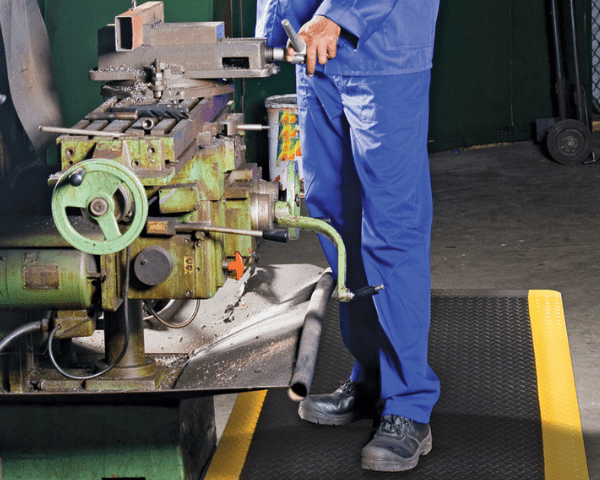
Don’t overlook your entryways and workstations, either. A WaterGuard Indoor/Outdoor Mat at your doors catches water and debris before it becomes a slip hazard. Anti-fatigue mats at standing workstations reduce both fatigue and the tendency for employees to shift into unsafe postures over a long shift.
Spills happen – what matters is what happens next
Whether it’s water from a leaking pipe, a chemical spill, or a biohazardous incident, the difference between a minor inconvenience and a serious problem often comes down to how fast and how prepared you respond.
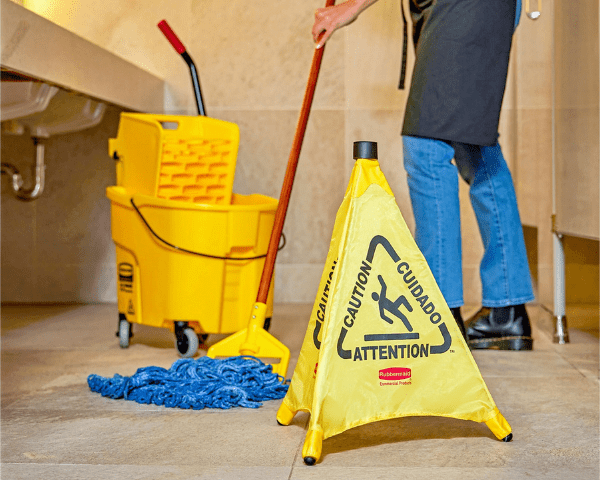
Start with signage. A Rubbermaid Caution Wet Floor Sign seems obvious, but you’d be surprised how many facilities only have one – and it’s always in the wrong place when you need it. Having a few on hand means a spill gets marked immediately, not after someone slips.
For cleanup, Spill Magic All-Purpose Spill Clean Up absorbs liquid fast and leaves the surface clean and dry. For larger or ongoing water issues – flooding, leaking equipment, storm intrusion – Quick Dam Water Dams and Flood Bags are genuinely impressive products. They’re filled with a super-absorbent material that swells and gels when it contacts water, forming a flexible barrier that contains and diverts water before it spreads.
And if you have employees working near vehicles or in parking lots, an Emergency Warning Triangle Kit is a straightforward way to alert others when something goes wrong.
If it’s not labeled, it’s a hazard
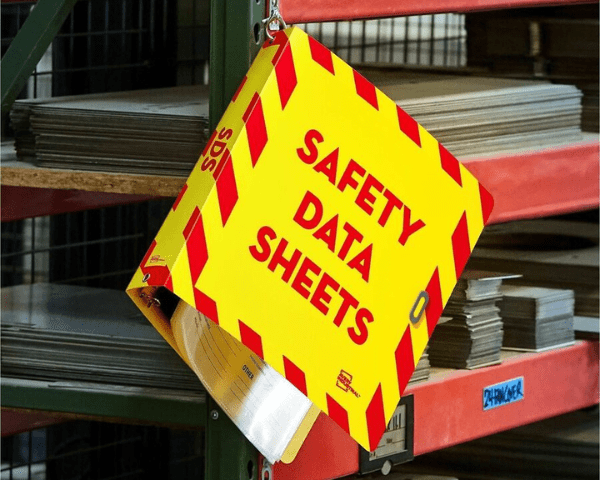
Hazard communication isn’t just a compliance requirement – it’s practical. When chemicals are clearly labeled, employees know what they’re handling. When storage areas are marked, things get put back where they belong. Whenever emergency procedures are posted where people can actually see them, response time improves.
For chemical labeling, the Avery UltraDuty GHS Chemical Labels are worth the investment over cheaper alternatives. They’re waterproof, plastic-based, and built to stay legible in industrial environments – not peel and smudge after a week. Pair them with an Avery UltraDuty SDS Binder to keep your Safety Data Sheets organized and accessible.
For general marking – equipment zones, storage locations, hazard areas – Sharpie Fine Point Industrial Markers and Pentel Opaque Paint Markers both hold up on surfaces where regular markers won’t. A Safco Write Way Dual-Sided Directional Sign gives you a flexible, repositionable wayfinding tool without a trip to the sign shop.
Organization is safety, too
This last one doesn’t always make the safety checklist, but it should. Cluttered walkways, improperly stored materials, and unsecured equipment are quiet contributors to workplace injuries.
Heavy-duty shelving like the Lorell 2,300lb Steel Shelving gives you a proper place for materials that currently live in a pile. A HON Brigade Storage Cabinet keeps hazardous or sensitive items locked and out of the way. Hand trucks – the Cosco Shifter or Safco Stow-Away – mean employees aren’t improvising when something heavy needs to move. And a Kidde Pro 5 Fire Extinguisher should honestly be in every workspace, full stop.
Small things matter too: Gorilla Tape and industrial-strength VELCRO can secure cables and mats that would otherwise become trip hazards. A Cosco Steel Folding Step Stool means employees aren’t standing on chairs to reach high shelves. The Giant Foot Doorstop keeps heavy doors from swinging unexpectedly.
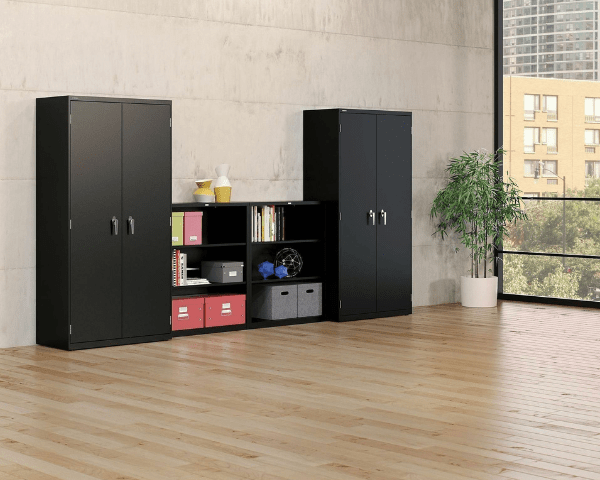
These aren’t glamorous purchases. But they’re the kind of thing you notice when they’re missing.
Where Porter’s fits in
Building out a safety program is one thing. Keeping it stocked and current over time is another – and that’s where a lot of organizations struggle.
When you work with Porter’s, you’re not placing orders into a website and hoping for the best. You get free next-day delivery throughout Southeast Idaho, a real person on the phone who knows your account, and delivery drivers who bring your order inside and put it where it needs to go. If you have an unusual need or can’t find what you’re looking for, we don’t redirect you to a FAQ page – we sit down and figure it out with you. That’s what we mean by Blue Cow Service, and it’s how we’ve done business since 1915.
Safety Month is a good time to do a walk-through of your facility with fresh eyes. If you find gaps, we’re here to help you close them.
Browse essential safety supplies at portersop.com or call us at 877-235-6998.
OFFICE FURNITURE
Looking for an office chair this summer?